Living on an island means accepting certain realities about emergency medical care. When something goes very seriously wrong—a major trauma, a heart attack, a stroke requiring specialized intervention—our local hospital can stabilize you, but definitive care often means getting to the mainland. Fast. That’s where air ambulance services like Life Flight Network and Airlift Northwest come in.
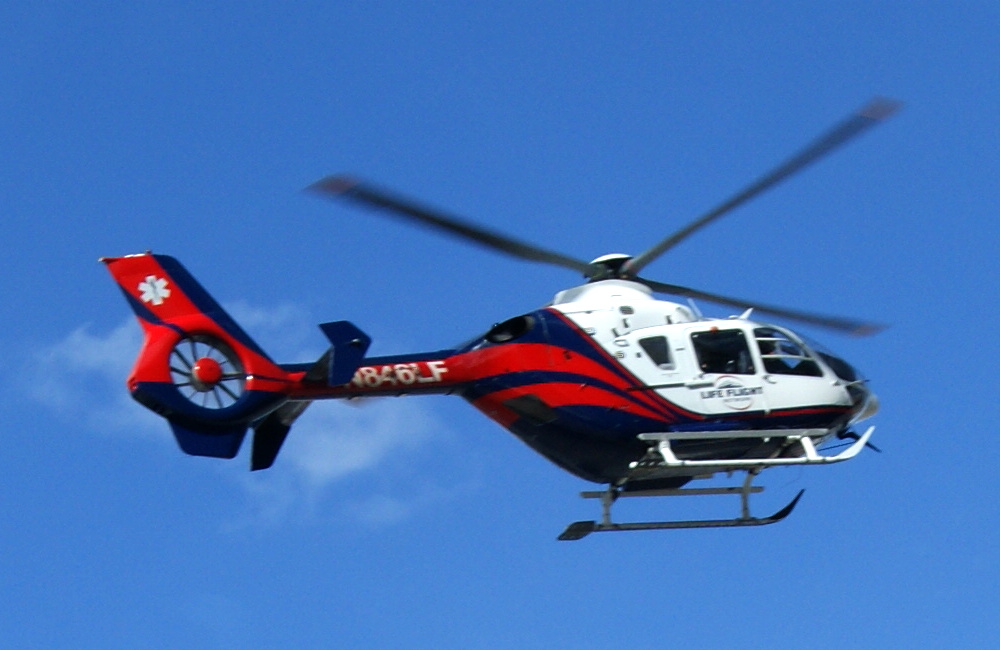
That reality changed significantly in September 2019, when Life Flight Network partnered with WhidbeyHealth to station a dedicated helicopter right here at the Medical Center in Coupeville. For the first time, Island County has 24/7 air medical transport based locally, with a crew ready to respond in minutes rather than waiting for a helicopter to fly in from elsewhere.
But Life Flight isn’t the only air ambulance serving our area. Airlift Northwest, operated by UW Medicine, has been transporting patients throughout the Pacific Northwest since 1982. Both services cover Whidbey Island, and here’s the thing most people don’t realize: in an emergency, you don’t get to choose which one shows up.
Life Flight and Airlift Northwest: Parallel Missions
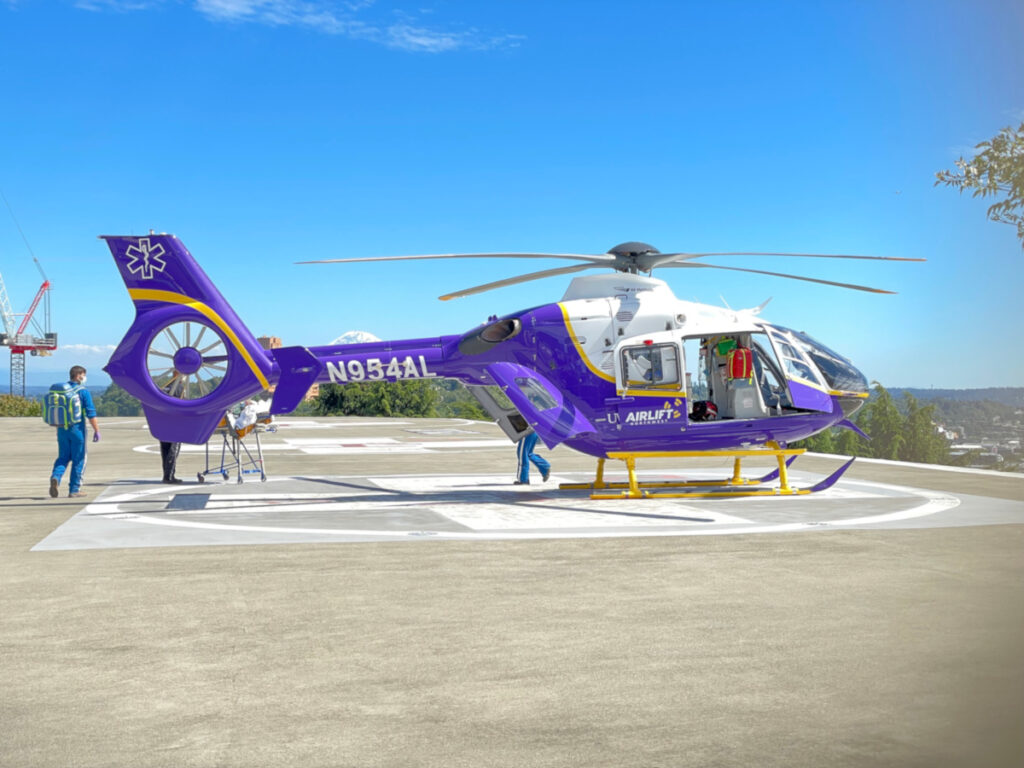
Airlift Northwest was founded by Dr. Michael Copass, who also helped develop Seattle’s renowned paramedic training program and served as director of emergency services at Harborview. In 1982, while he was teaching in Sitka, Alaska, a house fire severely burned three children. Despite desperate efforts to arrange transport, no air ambulance service existed in the region. All three children passed away. Copass launched what became the Pacific Northwest’s first critical care air ambulance that same year. He passed away in July 2024, but his legacy continues: Airlift Northwest has transported over 100,000 patients since its founding.
On a personal note, a significant number of people I know in EMS worked at some point under Dr. Copass’s leadership. He was known for treating everyone with the same respect, commitment, and kindness—regardless of occupation or situation. He would get on anyone he saw treating any patient with less than the utmost compassion. Dr. Copass was an amazing individual who will be deeply missed.
Life Flight Network’s origins trace back to 1978, when Emanuel Hospital in Portland launched what became one of the first hospital-based air ambulances on the West Coast—only the fourth such program in the nation. Today Life Flight has grown into the largest nonprofit air medical service in the country, operating bases across five states and owned by a consortium of hospital systems including OHSU and Providence.
What “Flying ICU” Actually Means
When I worked in surgery and emergency departments, I saw flight crews arrive with patients and was always impressed by what they’d already accomplished before hitting our doors. Think of them less as helicopters with stretchers and more as mobile intensive care units.
Airlift Northwest flies with two registered nurses with ICU and critical care experience. My experience wouldn’t come anywhere close to qualifying. These are some incredible individuals who complete extensive ongoing training to stay sharp on life-saving interventions. They train to perform rapid sequence intubation and blood transfusions while managing multiple IV medications simultaneously. The aircraft carry ventilators, cardiac monitors, ultrasound equipment, and warming systems for blood products. I’ve only worked with Airlift Northwest crews personally, but Life Flight fields similarly qualified teams.
Speaking of blood, both services carry blood products on their aircraft, which has dramatically improved survival rates. The PAMPer trial, one of the largest studies of its kind, found that 30-day mortality dropped from 33% to 23% when plasma is given during air transport. While research continues to refine which patients benefit most, having blood products in the air changes outcomes in ways that simply weren’t possible a generation ago.
Local Base, Local Heroes
The helicopter stationed at WhidbeyHealth is an AgustaWestland AW109E. This twin-engine aircraft cruises at 172 miles per hour, making it one of the faster light helicopters available. More importantly, for our frequently overcast corner of the world (Seattle-Tacoma International Airport averages 226 cloudy days per year, among the highest of any major U.S. city), it has instrument flight capability, meaning it can operate safely when visibility grounds lesser aircraft. The avionics package includes weather radar, a satellite-based Global Positioning System, and an auto-coupled Instrument Landing System designed to reduce pilot workload during challenging conditions.
The partnership created nearly 20 jobs on the island and serves not just Whidbey but also the San Juan Islands and neighboring communities throughout Island County. WhidbeyHealth EMS responds to approximately 9,800 calls annually, and while the vast majority of patients are treated locally, some need to get somewhere else quickly. Before 2019, “quickly” meant navigating ferry schedules and Seattle traffic. Now it means a flight measured in minutes to Harborview Medical Center, the only Level I trauma center for our region.
The Pilots Who Fly Into the Dark

The professionals who fly these missions bring extraordinary experience—and accept extraordinary risk. EMS helicopter pilots typically log thousands of flight hours before qualifying, and Life Flight requires extensive annual recurrent training including night vision goggle certification and simulator work for handling sudden instrument conditions.
They fly at night. They fly in weather that keeps other aircraft grounded. They land in parking lots, on hillsides, alongside highways—wherever someone is dying and needs to not be dying somewhere else. The NTSB has documented dozens of EMS helicopter accidents over the years, with 2008 being one of the deadliest on record.
Remembering Steve Smith
In 2005, Whidbey Island lost one of its own. Steve Smith, a Clinton resident who had flown for Airlift Northwest since 1988, was killed along with flight nurses Erin Reed and Lois Suzuki when their helicopter went down in Puget Sound near Edmonds. The NTSB ruled the cause undetermined, with most of the wreckage sitting under 300 feet of water.
Smith had logged more than 8,500 flight hours with Airlift Northwest. His wife Norma later served as the 10th District’s State Representative from 2008 to 2021. Three years before the fatal crash, he had survived a dual engine failure near the Cascade mountain town of Baring that “tore an artery near his heart, broke his back, and fractured every rib on his left side.” He “willed himself back into the cockpit,” as Dr. Copass later put it. A former Marine Corps lieutenant colonel who flew helicopters in Vietnam, Smith was remembered by his brother-in-law as someone who ”really believed he was called to an eternal purpose in his job.“
These are the kind of people who fly these helicopters. People who’ve looked at the risks, done the math, and decided that getting patients to definitive care is worth it.

You Get Who You Get
Here’s the practical reality that catches many islanders off guard: when a physician or EMS crew determines you need air transport, they call for the closest available helicopter. You can’t request a specific service, and neither can your family. As Dr. Joshua Corsa, Medical Director for neighboring San Juan County, explained, “When we make our decisions for time-critical emergencies, we choose whoever is the closest, most appropriate provider.” Weather, aircraft availability, and proximity all factor into which crew responds.
This matters because the two services no longer honor each other’s memberships. Until March 2020, membership with either one covered you if the other transported you. Life Flight Network’s membership materials explicitly listed Airlift Northwest as a reciprocal partner at the time. That reciprocity ended, and now membership with one service only covers transport by that specific service.
Why Memberships Matter
Air medical transport can easily exceed $30,000 for a helicopter flight. The No Surprises Act (which took effect January 2022) provides some protection: your insurer must treat emergency air ambulances as in-network, and providers cannot “balance bill” you. But you’re still responsible for deductibles and co-payments, which can run into thousands of dollars.
Membership programs fill that gap. Life Flight Network memberships cost $85 per year and cover your entire household. This includes your spouse or partner, plus family members who are under 25, disabled, or 65 and older. Airlift Northwest memberships run $60 per year in Washington. As a member, the service bills your insurance and accepts whatever they pay as payment in full. You owe nothing beyond your membership fee for medically necessary emergency transport.
Given that you can’t control which helicopter responds, many island residents carry both memberships. It’s less than $150 per year total: a small price for peace of mind when you live surrounded by water.
On the worst day of your life, these are the people you want showing up: nurses who carry blood products and know how to use them, pilots like Steve Smith who will fly into conditions that ground everyone else, and crews who’ve trained for exactly the moment you’re having.
They’ve already decided you’re worth the risk.
Thank you so much for reading.
Sincerely,

(your Whidbey Nurse)
This blog post is intended for educational purposes and should not replace personalized medical advice from your healthcare provider.


