“There’s a fire in the kitchen!”
Your heart races as you reach for your phone to call 911, but then you pause. Where in the kitchen?
“It’s coming out of the pan by the guy cooking!”
Ah, now we have the full picture. What seemed like an emergency turns out to be someone enjoying flambéed shrimp for dinner, and suddenly everything changes.
This simple example illustrates something I’ve learned through decades of nursing: context transforms data into actual meaning. Without it, we make poor decisions, whether that means calling the fire department unnecessarily or missing the nuances that make each patient’s health journey unique. The good news? When patients, providers, and support systems like nursing care work together to maintain that context, remarkable things happen.

The Challenge of Keeping the Whole Story Together
Let me share a scenario showing how system barriers create roadblocks even for excellent medical care. A patient develops shoulder pain and their doctor prescribes ibuprofen, which works wonderfully until an endoscopy reveals stomach ulcers. The GI specialist, quite appropriately, says stop the ibuprofen and suggests coordinating with primary care for alternatives. But here’s where the system fails: Insurance requires over-the-counter trials first. Then, there’s a three-month wait for pain management. After that, they need eight weeks of PT documentation before considering injections—even though PT was already tried last year.
What went wrong here? Each provider is doing exactly what they should within their specialty, following evidence-based guidelines and working hard to help. The challenge isn’t medical knowledge; it’s that our healthcare system, largely shaped by insurance requirements and administrative barriers, makes it incredibly difficult for these dedicated professionals to see and act on the complete picture.
This systemic fragmentation has become widespread in modern healthcare. Research shows the average American patient has seen 18.7 different doctors during their lifetime, while people over 65 have seen an average of 28.4 individual physicians. When nearly one-third of older adults now visit at least five different doctors each year, maintaining continuity becomes a Herculean task for everyone involved.
The statistics tell a story of systemic challenges: only half of specialist referrals actually get completed, and between 25-50% of referring physicians never even find out whether their patients saw the specialist they recommended. This isn’t about providers not caring. It’s about a system that makes communication and follow-through extraordinarily difficult.
Despite these challenges, it’s crucial that patients persist. Don’t give up or give in to the difficulties of the system! Your health is worth fighting for, and while the barriers are real, your determination to navigate them makes a difference. Keep advocating for yourself, keep your appointments, and keep pushing forward—your providers want to help you succeed.
When Time Constraints Limit Connection
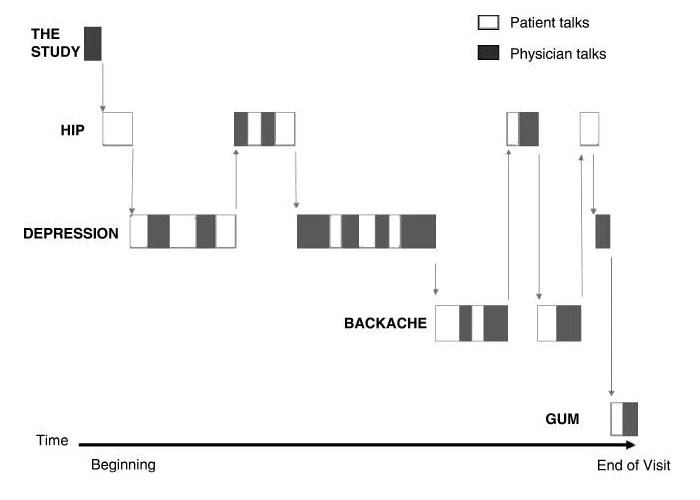
Perhaps you’ve experienced this: you’ve prepared for your appointment, written down your questions, and you’re ready to share what’s been happening. But the visit feels rushed, and you leave feeling like something got missed. You’re not imagining this challenge. It’s real and it affects both patients and providers.
A 2022 national survey found that 52% of Americans feel their symptoms are “ignored, dismissed, or not believed” when seeking medical treatment. Meanwhile, over 87% of physicians genuinely believe they do an excellent job listening to their patients. This disconnect isn’t about intent; it’s about what happens when insurance companies dictate that primary care visits can only last 15.7 minutes while requiring doctors to address a median of six different topics.
Research shows patients get interrupted after only 11-16 seconds when answering questions, yet it would take just 6 more seconds for them to finish their thought. But here’s the thing: physicians aren’t interrupting out of rudeness. They’re trying to maximize the limited time they have, juggling multiple complex issues while managing electronic health records, insurance requirements, and quality metrics all at once. It’s a testament to their skill that they manage as well as they do.
This time pressure has real consequences: studies reveal that 55-58% of missed or delayed diagnoses involve challenges with appropriate test ordering. When time pressure causes physicians to make 37% more diagnostic errors, it’s clear that the system—not the providers—needs support.
The Art and Science of Interpretation
Modern medicine has incredible diagnostic tools at its disposal, and skilled physicians work hard to interpret these within the time constraints they face. Take vital signs, for example: a resting heart rate of 40 beats per minute could signal a serious problem requiring immediate intervention, or it could be perfectly normal for a marathon runner. Making that distinction requires both medical expertise and knowledge of the patient’s context, something that’s increasingly difficult when appointments are brief and providers are seeing thousands of patients.
White coat hypertension provides another example of context’s importance. Many people’s blood pressure spikes in clinical settings purely from anxiety, not from underlying disease. Recognizing this pattern requires providers to look beyond the immediate numbers, something they strive to do despite time pressures.
Interestingly, 60-70% of laboratory errors occur in the pre-analytical phase, before the test is even run. This highlights how ordering the right tests and interpreting them correctly requires understanding the patient’s full situation, something that becomes exponentially harder when insurance companies limit appointment times and create administrative burdens that pull providers away from patient care.
Working Together Despite System Challenges

If patients see multiple providers, coordination becomes crucial yet challenging. Picture someone taking medications from their primary care doctor, cardiologist, and rheumatologist, each working within their specialty’s best practices. This scenario significantly increases the odds of medication errors, not because providers aren’t careful, but because our fragmented system makes comprehensive medication reconciliation incredibly difficult.
PRO TIP: Here’s where pharmacists become unsung heroes of healthcare coordination. Using a single pharmacy can dramatically improve your safety. When your pharmacist knows every medication you take, they can catch dangerous interactions that might slip through the cracks of a fragmented system. This includes supplements, which can have significant interactions with medications. Having one pharmacist who knows EVERYTHING you take—prescriptions, over-the-counter medications, vitamins, and herbal supplements—creates a vital safety checkpoint that protects you when provider communication breaks down.
Studies show that fragmented care leads to approximately twice as many diagnostic tests and $4,542 in higher annual healthcare spending per patient. This isn’t anyone’s fault; it’s what happens when insurance companies and pharmacy benefit managers create barriers to communication and coordinated care.
The Power of Partnership in Healthcare
When patients and providers work together with adequate time and support, outcomes improve dramatically. Multiple studies demonstrate that patient-centered care leads to better health outcomes, fewer hospitalizations, and improved medication adherence. Medicare readmission rates decreased from 19% in 2011 to 17.5% in 2013 when quality improvement initiatives gave providers more tools and time for patient communication.
The key is creating partnerships where everyone plays their part. Patients who come prepared with questions, medication lists, and symptom diaries help their providers maximize those precious appointment minutes. Providers who are given adequate time and resources can better synthesize complex medical information. And support systems like nursing care can help bridge the gaps, maintaining continuity when the system creates fragmentation.
With roughly half of physicians experiencing burnout, it’s clear that healthcare providers need support too. They entered medicine to help people, and the administrative burdens placed on them by insurance companies and healthcare systems pull them away from what they do best: caring for patients.
Building Bridges with Contextual Care
Understanding context isn’t just about healthcare: it’s how we navigate life. In finance, we know a single month’s spending means nothing without the bigger picture. In education, one test score doesn’t define a student’s potential. We naturally seek context in our relationships and daily decisions because we understand that the whole story matters.
The physicians, nurses, and healthcare providers serving our community bring incredible skill and dedication to their work, often performing minor miracles within the constraints they face. They’re multitasking champions, synthesizing vast amounts of information while navigating insurance requirements, prior authorizations, and electronic health records, all while trying to provide compassionate care.
Supporting Your Healthcare Continuum
As a registered nurse here on Whidbey Island with decades of experience spanning emergency departments, operating rooms, and disaster response, I’ve seen firsthand how dedicated our healthcare providers are and how challenging the system can be for everyone involved.
Working with a nurse means having time for your complete health story. You gain an advocate who helps you navigate the system more effectively. This includes helping you prepare for medical appointments with organized questions and medication lists, understanding and coordinating between different specialists’ recommendations, and maintaining the continuity of your health story when the system creates gaps.
This collaborative approach recognizes that everyone—patients, providers, and support systems—has a vital role in maintaining healthcare context. Patients bring their lived experience and must be active participants, sharing their complete story. Providers bring medical expertise, working tirelessly to synthesize complex information within challenging time constraints. Nurses can provide the additional continuity that helps preserve context between providers. The ability to interpret health information within its full context, developed over decades of patient care, represents the difference between seeing isolated data points and understanding the whole person.
Ready for healthcare that sees the whole picture? Contact Whidbey Nurse to learn how personalized, context-centered nursing care can help you navigate your health journey here on Whidbey Island.
When we work together to maintain and share context despite the barriers insurance companies and administrative requirements create, we restore what healthcare has lost. Because at its heart, healthcare isn’t about lab values or diagnosis codes or prior authorizations. It’s about understanding each unique person’s story, connecting the dots between past and present. It’s about recognizing that context transforms data into meaning, and meaning guides us toward real healing.
Thank you so much for reading.
Sincerely,

(your Whidbey Nurse)
This blog post is intended for educational purposes and should not replace personalized medical advice from your healthcare provider.

